
Counselling in Auckland
Finding the right counsellor is an important step towards better mental health and wellbeing. Our Auckland counsellors provide compassionate, confidential support for individuals, couples, young people, and families, offering a safe space to work through life’s challenges at your own pace.
Whether you’re seeking support for anxiety, depression, grief, stress, trauma, relationship difficulties, or personal growth, we’re here to help. Explore the counsellor profiles below to learn more about each practitioner’s experience, areas of expertise, and approach, so you can find the person who feels right for you.
James Hamill - Counsellor in Training

About me
Kia ora! My name is James and I am a 31 year old Student Counsellor in Tāmaki Makaurau.
I am an ex-tradie that’s made the shift to mental health after learning how valuable mental health understanding is for men all over the motu. Many people are struggling constantly and often in solitude with their mental wellbeing so a lot of my interest is around how we can help each other break cycles of violence and silence among our men, learning how to emotionally regulate and help each other through talking, having a laugh, and being real.
I have experience as a client of counselling which is how I learned the value of having someone willing to hear you out and help you grow and change for your personal betterment. As a queer pacific-island tradie I understand what it’s like to walk in two worlds and have a strong understanding of collectivist cultures like ours and how it relates to western-based cultural approaches and thinking. I place a lot of importance on culture in my practice.
In terms of how I work, I like a Person-Centred, Narrative Approach, meaning I’m interested in your story and how you see things, and that’s what we work with in our sessions. I am also interested in Existential Therapy, Interactive Drawing Therapy and Solution-Focused Brief Therapy which we can discuss if and when we meet.
Modalities aside, the efficacy of therapy has been proven to be largely dependant on the therapeutic relationship and so if we click, we can start to do some great work together. And if not, there’s no need to worry as we can work together to find you a better fit so that you can begin to work towards finding some peace.
Ngā mihi nui
Kirstine Bowker - Counsellor in Training

About me
Hi, my name is Kirstine and I’m a student counsellor based in Auckland.
I know how hard it can be to reach out and ask for help. Life can be challenging, and sometimes having a safe, non-judgemental space and someone to truly listen can make a real difference.
It was through my own lived experiences that I embarked on the journey to become a counsellor. Having once been in the client’s seat myself, I bring understanding, empathy, and patience to my work.
My counselling approach is person-centred and relational. I integrate a range of therapeutic approaches, including narrative therapy, solution-focused brief therapy, interactive drawing therapy, emotional regulation strategies, and reflective exploration.
I enjoy supporting clients to identify their strengths, build resilience, and develop greater inner calm and confidence
George Jennison - Counsellor in Training
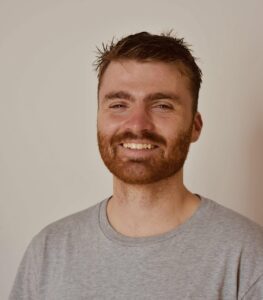
About me
Starting counselling can feel unfamiliar, especially for men who may not have grown up feeling comfortable talking about their emotions. Opening up about vulnerable experiences, particularly trauma, can be challenging. If you’re at the point of considering reaching out to a counsellor, that’s a meaningful first step, and one worth acknowledging.
I’m currently in my final year of a Bachelor of Applied Counselling at Manukau Institute of Technology, practising under external supervision. My approach is client-centred, which means we’ll focus on what’s bringing you to counselling, what matters to you, and what you hope to get out of our work together. I take a trauma-informed approach and draw on therapeutic perspectives including Gestalt, narrative therapy, and Cognitive Behavioural Therapy (CBT).
I have a sincere interest in supporting men who have experienced trauma. I find this work deeply meaningful, both professionally and personally. Having worked through my own experiences of trauma with the support of EMDR, I understand firsthand how valuable the right therapeutic support can be.
My hope is to offer a space where you can feel heard, understood, and supported at your own pace, without pressure to share more than you’re ready to. Together, we can begin to make sense of what you’ve been experiencing and explore what might help you move forward.